Like-for-Like or a New Design? Choosing Your Fire Rebuild Path
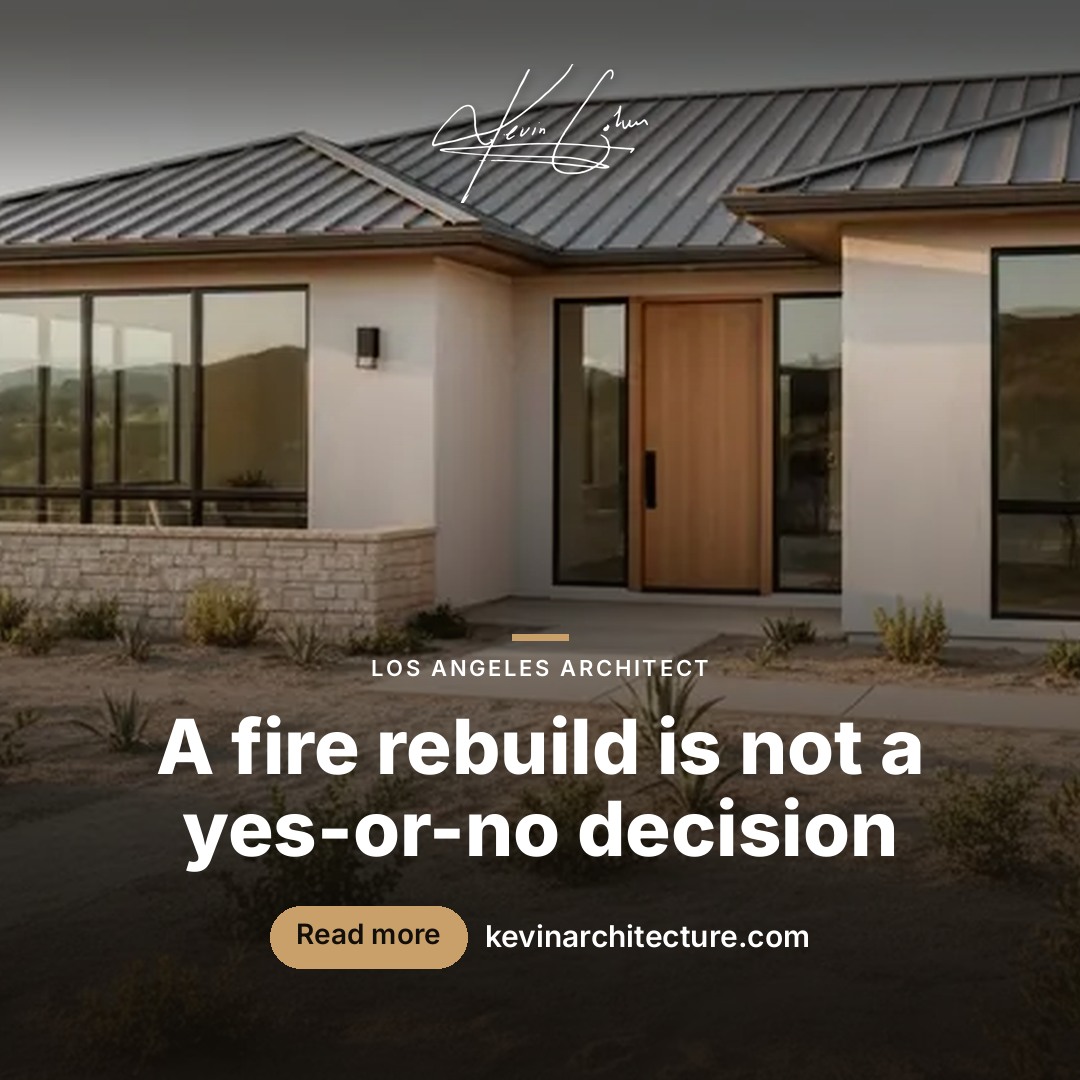
Homeowners facing a rebuild often feel they must choose between getting their house back and starting over. In practice the choice is a spectrum, and an architect, as your first call and the coordinator of the team, helps you find the right point on it for your site, your records and what the house meant to you. The architect keeps the whole picture in view.
What like-for-like usually means
A like-for-like rebuild aims to replace the lost house at a similar size, footprint and general appearance. Some jurisdictions have procedures intended to simplify the process for this kind of rebuild. What counts as similar, what changes are permitted, and what review applies all vary by jurisdiction and can change over time, so confirm the current rules with your local building and planning departments before you rely on them.
Why people choose it
For many families, the appeal is continuity. The house had a character, a particular kitchen, a view from a specific window. Rebuilding something close to it can feel like a way to recover part of what was lost. It can also give you a clear starting point, because plans, photographs and records of the original often exist.
What like-for-like does not mean
It does not mean copying the old house exactly. Current building requirements, especially those that apply to construction in wildfire-prone areas, may call for different materials and details than the original used. The new house may look familiar but be built differently. It also does not mean the house will be unchanged in how well it works. A plan that was awkward before will usually still be awkward.
Why people choose a new design
A new design gives you the chance to correct what never worked: a dark interior, a poor connection to the garden, rooms that no longer fit how your household lives. It can also respond better to the site, to orientation and to fire-resistant detailing from the start rather than adapting an older layout. The tradeoff is that a changed design may involve more review, more decisions and a longer conversation with the building department. We are not able to predict what any agency will require.
The middle path
Many rebuilds land between the two. You keep what you loved, such as the proportions, the materials or the position of the main living spaces, and you rethink what did not work. A good architect can help you sort the elements of the old house into those worth restoring and those worth leaving behind.
Questions that help you decide
- What did you love about the old house, and can you describe it in terms other than appearance?
- What did you tolerate that you would not choose again?
- What do your records show about the original size and layout?
- What does your insurer say about changes to the design? Ask them directly.
- What does your local building department say about the review path for each option?
Rebuilding is not only a recovery of what was there. It is also a chance to decide what should be there next, and both answers are valid.
Keep the original house in mind, but not in charge
Memory is a poor drafting tool. Families often remember a house as larger, brighter or simpler than it was. Photographs, old drawings and conversations with everyone who lived there can help separate what the house actually did from what you hoped it did. That honest picture is the best foundation for either path.
No decision has to be final today
A feasibility study can compare the paths side by side before you commit. Our guide to remodel-or-rebuild questions uses a similar approach, and the FAQ explains how we typically work through early decisions.
To explore your own situation, see our fire rebuild services or write to us through the contact form.
Start with the architect. Whatever the question is, the design, the permit, the budget or who to bring in next, an architect looks at the whole project first and then helps you choose and coordinate the engineers, designers and builders it needs. Talk with Kevin Cohen, AIA about your project.
General information only, not legal, engineering or code advice. Rules differ by city and change over time, so confirm the details for your property with your local building and planning departments and with qualified professionals.